The 260th Fallen Soldier Identified
JO JONG-HO
MASTER SERGEANT
- 08 / 10OPERATION
HOMECOMING01 RECOVERY
Found through a Report and a Search
An informant who overlooked no small clue, together with MAKRI’s specialist investigation and recovery teams, made this recovery possible.
His remains were among those of nineteen individuals recovered at Jupa-ri. Parts of his skull and the bones of his arms and legs remained.
PIC. 01 02 FALLEN IN BATTLE
Time Stilled, Two Days before the Armistice
After enlisting at the 1st Training Centre in Daegu in December 1950, he was assigned to the Republic of Korea Army’s 7th Division. He survived repeated battles over three years.
In July 1953, he was killed in the Jeokgeunsan–Samhyeon sector, just two days before the Armistice Agreement was signed. In recognition of his distinguished service, he was awarded the Hwarang Order of Military Merit in 1954.
PIC. 02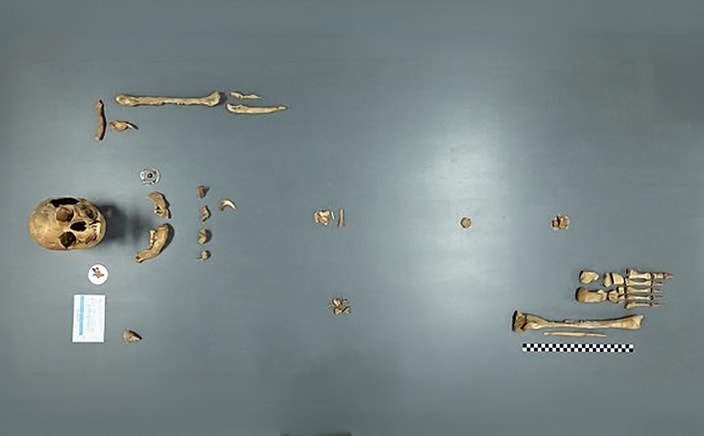
[Recovered remains of Jo Jong-ho]
KOREAN WAR BATTLE RECORD | PIC.03Battle of
the Jeokgeunsan
Samhyeon Sector1953.07.15 - 1953.07.23
TOPOGRAPHIC MAP
OF KOREAIn the area around Jupa-ri, Wonnam-myeon, Cheorwon County, Gangwon Province, the Republic of Korea Army’s 7th and 11th Divisions repelled attacks by four Chinese divisions, then counterattacked to stabilise the front.
03 IDENTIFICATION
A Son Carries His Mother’s Wish
His identification owed much to the informant and to MAKRI’s specialist investigation and recovery teams. Above all, it was made possible by a son who provided a DNA sample in the hope of fulfilling his mother’s wish.
Portrait of Jo Jong-hoPIC. 04In April 2009, his son, Jo Jeong-won, visited Yeongdong County Public Health Centre to provide a DNA sample in the search for his father.
At the time, a spouse could not be laid to rest alongside someone commemorated only by a memorial tablet. To fulfil his mother’s wish, his father’s remains had to be found.
PIC. 0504 THE FAMILY
Mother’s Deepest Wish,
Fulfilled at LastThroughout her life, his mother, Gwon Mak-bun, would say, “If only we could find your father, we could be buried together at the national cemetery…”
Fortunately, an amendment to the National Cemeteries Act in 2017 allowed her to be laid to rest at Chunghondang, Seoul National Cemetery, after she died in 2019. Now, the way was open for her husband’s remains to rest beside her.
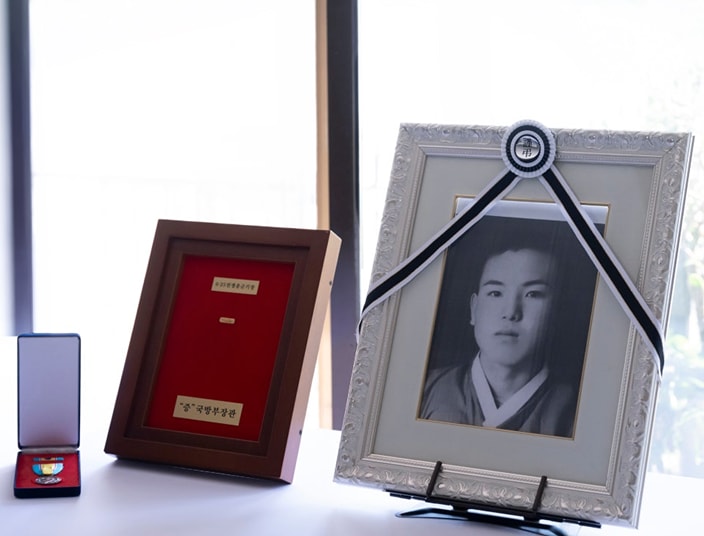
Although Jo Jeong-won was undergoing treatment for an illness and had difficulty moving about, he expressed his determination to attend the homecoming ceremony.
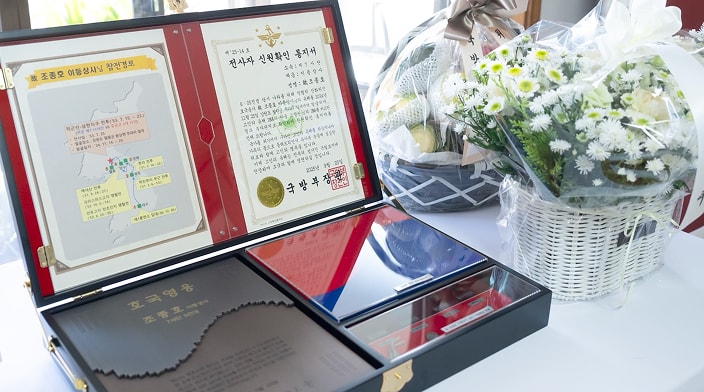
“Words cannot express my joy at finding my father’s remains. Until now, I thought I had fulfilled my duty as a son by laying my mother to rest at the national cemetery.
“Now that my father’s remains have been found, they can finally rest together there, just as she wished all her life,” he said, expressing his gratitude to the nation.