The 256th Fallen Soldier Identified
LEE BONG-SU
CORPORAL
- 04 / 10OPERATION
HOMECOMING01 RECOVERY
A Name Restored after 3 Years
Three years passed between recovery and identification. All that was recovered was a single bone from his right lower leg—the smaller of the two bones between the knee and ankle.
There were no accompanying personal effects and no photograph. Yet this one bone became the sole evidence that a seventeen-year-old student soldier had been there.
PIC. 01 02 FALLEN IN BATTLE
From
School Uniform
to BattlefieldAfter joining the war as a student soldier in July 1950, he was assigned to the Republic of Korea Army’s Capital Division. He was killed fighting in the Battle of Gigye–Angang that September.
By then, he had exchanged his school uniform for a military one and completed a month of training.
PIC. 02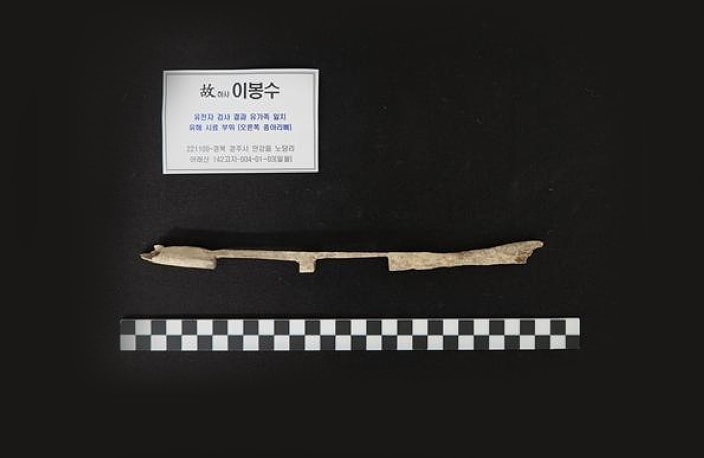
[Recovered remains of Lee Bong-su]
PIC. 03[Messages on a Taegeukgi, the Korean national flag, believed to have been written by Lee Bong-su]
KOREAN WAR BATTLE RECORD | PIC.04BATTLE OF
GIGYE-ANGANG1950.08.09 - 1950.09.22
TOPOGRAPHIC MAP
OF KOREAWhile Republic of Korea and United Nations forces were establishing the Naktong River defensive line, the Republic of Korea Army’s Capital Division fought around Angang, Pohang and Gyeongju to halt the southward advance of the North Korean 12th Division.
03 IDENTIFICATION
The Youngest Brother’s Search
His identification was made possible by the determined involvement of his youngest brother, Lee Bong-gu, who wanted to find the family’s eldest son. He called MAKRI himself to ask how to provide a DNA sample.
Although a staff member offered to arrange an investigator’s visit to his home, he chose to go in person to Gyeongju Public Health Centre and provide a sample there.
PIC. 0504 THE FAMILY
The Gate That Was Always Left Open
The war broke out while he was in his fourth year at Gyeongju Middle School. As North Korean forces advanced south and artillery could be heard even in Gyeongju, he told his father, “Father, I am going to join the army.”
For several days, his father tried to dissuade him. In the end, he resolved to go to war with four friends from the same school.
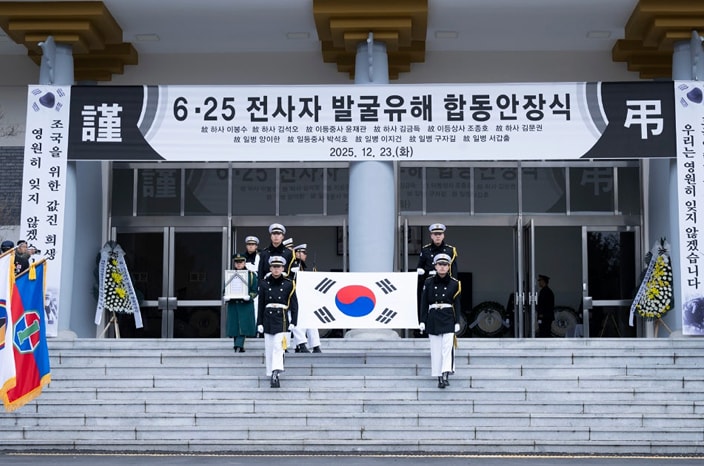
His younger sister, Lee Jeong-sun, said, “I am trembling all over. I keep saying my brother’s name. Even as our father was dying, he never gave up hope that Bong-su would come back alive. ‘Bong-su will come! Bong-su will come!’ he said.
“Our mother would not wear a headscarf, even in the bitterest winter cold, because she feared that if my brother came home, he might not recognise her.”
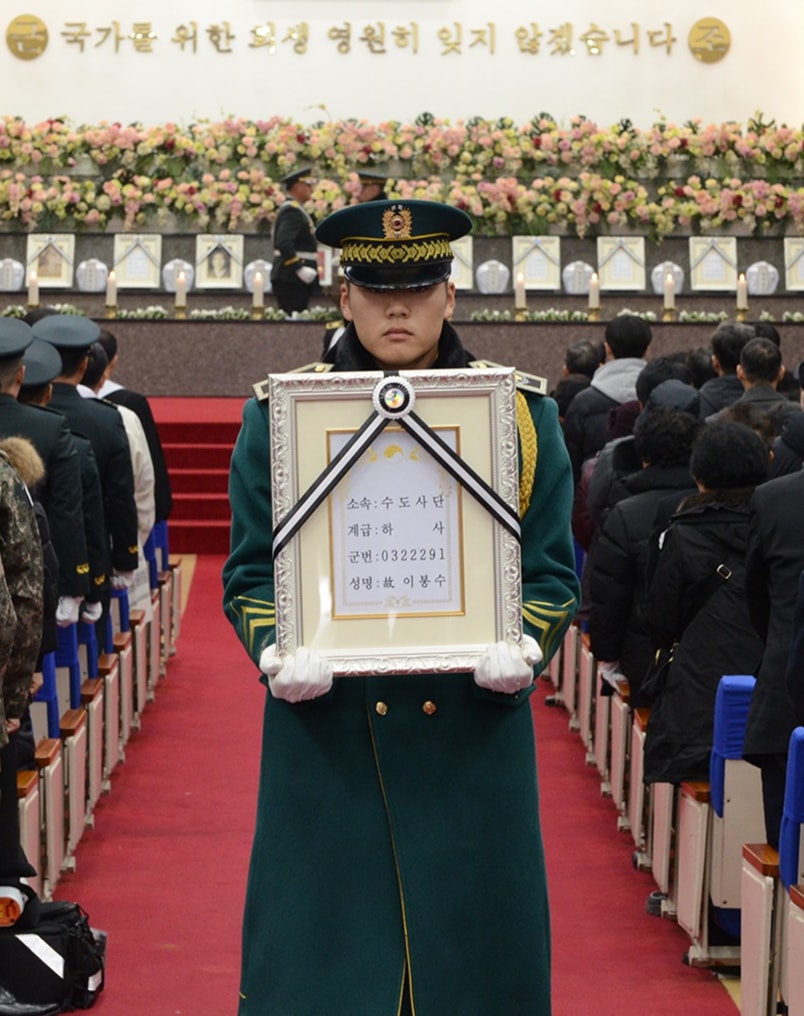
His younger brother, Lee Bong-gu, recalled, “Our mother believed all her life that he would return. She always left the gate to our home open.”