The 251st Fallen Soldier Identified
KIM YEONG-GI
CORPORAL
- 01 / 10OPERATION
HOMECOMING01 RECOVERY
Homecoming 25 Years After Excavation
His remains were recovered in the very first year of the national recovery programme. In 2000, the remains of 334 Republic of Korea and United Nations service members were recovered, along with 9,370 personal effects.
Only three of those who had fallen were identified that year. It would take twenty-five years for his remains to reach his son.
PIC. 01 02 FALLEN IN BATTLE
Fierce Fighting,
until the Very Eve of
the ArmisticeHe enlisted in January 1953, leaving his wife and infant child behind. Serving with the Republic of Korea Army’s 8th Division, he survived battle after battle.
But in July 1953, as hilltop fighting intensified during the final stages of armistice negotiations, he was killed in the Battle of Kumsong. The armistice was little more than ten days away. Only part of his remains was recovered, principally bones from his arms and legs.
PIC. 02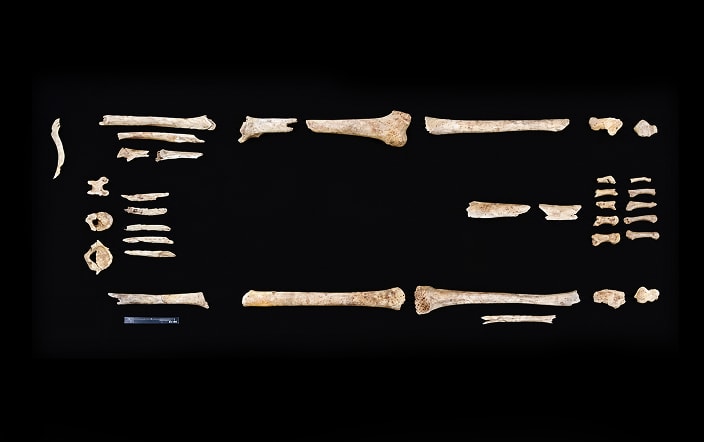
[Recovered remains of Kim Yeong-gi]
KOREAN WAR BATTLE RECORD | PIC.03BATTLE OF
KUMSONG1953.07.13 - 1953.07.19
TOPOGRAPHIC MAP
OF KOREASix Republic of Korea divisions—the Capital, 3rd, 5th, 6th, 8th and 11th—defended against and checked an offensive by fifteen divisions under five Chinese armies seeking to seize the Kumsong salient on the central front.
03 IDENTIFICATION
A Name Restored through Renewed Analysis
His identification was made possible by the tireless work of MAKRI investigators meeting surviving families across the country, and by the resolve of DNA analysts who returned to long-recovered remains with new techniques.
Drawing on regional studies of the war, investigators examine military service records and casualty lists to trace surviving relatives. A family DNA sample for Kim Yeong-gi was collected during an investigator’s visit in 2015.
PIC. 04Since March 2021, MAKRI has been conducting renewed DNA analysis on remains recovered many years earlier. It was through this work that a father–son relationship was established in his case.
PIC. 0504 THE FAMILY
A Father Returns
to His SonHe grew up helping his parents on their farm. Two years after marrying, he held his first child in his arms; soon afterwards, he enlisted.
The baby who was only eight months old when they parted is now a white-haired man of seventy-three.
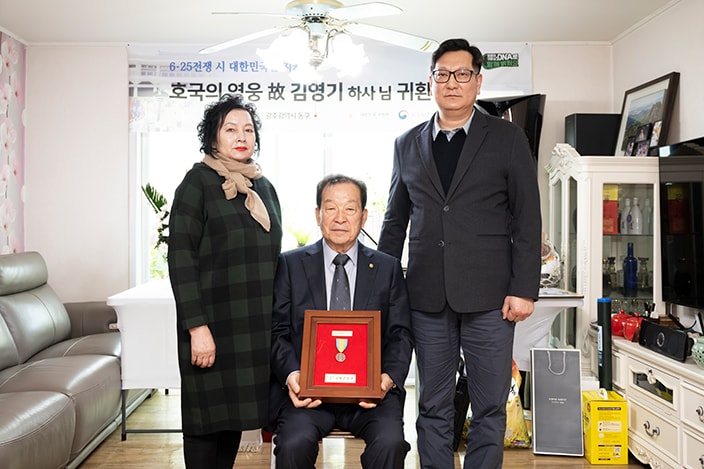
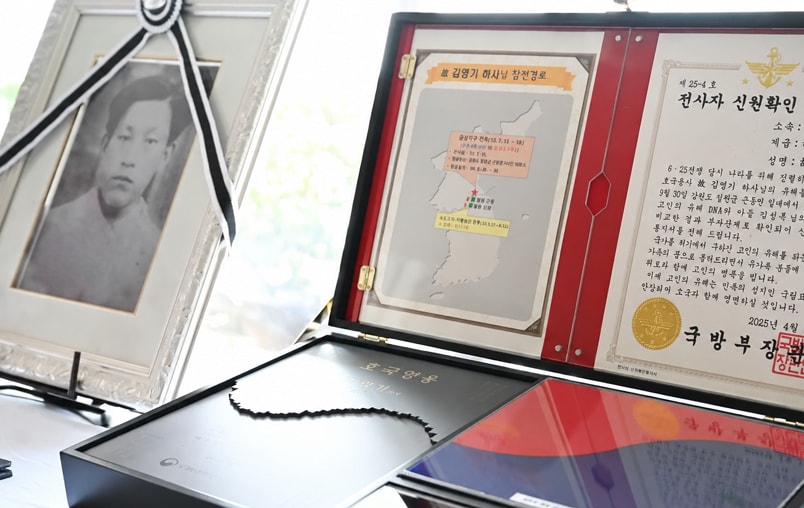
“Now that my father’s remains are coming home, that wish has been fulfilled. Before she died, my mother gave me the photograph of him she had treasured, so that I could remember his face.
That photograph gave me the strength to keep searching for his remains,” his son recalled through tears.